

The plan was, in its own way, elegant. Forty-four armed mercenaries would fly into the Seychelles posing as a rugby-playing beer club on holiday. They would clear customs carrying AK-47s hidden beneath false bottoms in their luggage and rugby balls packed on top to compensate for the weight. Once through, they would seize the airport, the army barracks, and the radio station, and install the deposed president. The whole operation would take hours. The new government would be in place by nightfall.
There was one complication. Some of the mercenaries were genuinely drunk.
The Man, The Plan
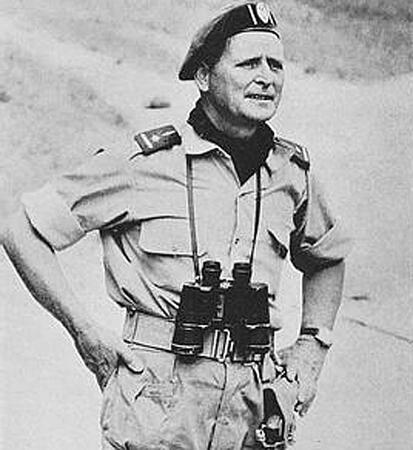
Thomas Michael “Mad Mike” Hoare was sixty-two years old in November 1981, a retired stock broker living in suburban Durban who had spent the previous decade being outshone by rivals. In the 1960s, he had commanded some 300 soldiers in the Congo to suppress a communist-backed rebellion — an operation that made him famous enough to inspire the 1978 Richard Burton film The Wild Geese. By 1981, his reputation needed polishing.
The opportunity came through a network of Cold War anxieties and exiled politicians. France-Albert René had deposed the Seychelles’ founding president, James Mancham, in a 1977 coup and steered the archipelago toward socialism — an arrangement that irritated both the South African government and, less vocally, certain interests in Washington, which had recently established a military facility on nearby Diego Garcia and preferred a cooperative neighbor. Mancham had been lobbying for a counter-coup since 1978. The South African government, through a front company called Longreach, directed him toward Hoare.¹
Hoare assembled a force of 44 men — 27 members of the South African Defence Force, 9 ex-Rhodesian soldiers, and assorted veterans of the Congo campaign. The operation was chronically underfunded: Hoare had advised that $5 million would be needed; approximately $300,000 was provided. The rest, according to the plan, would come from the Seychelles Treasury once the coup succeeded. Hoare himself was to be paid $100,000, though he later told a South African court he never knew who was actually paying him.²
For the cover identity, Hoare reached back to a defunct 1920s English social club called the Ancient Order of Froth-Blowers — a charitable organization that had raised money for orphans and dissolved during the Depression. In November 1981, he resurrected it as “Ye Ancient Order of Froth-Blowers,” and in his memoir The Seychelles Affair described how it was built: “We were a Johannesburg beer-drinking club. We met formally once a week in our favourite pub in Braamfontein. We played Rugby. Once a year we organised a holiday for our members.”³ The cover story included toys for orphanages packed above the weapons — bulky enough to fill the bags, light enough not to trigger suspicion about the weight.
The Airport
At 5:30 p.m. on November 25, 1981, Hoare and his men landed at Seychelles International Airport on Mahé. The cover held, more or less, for most of them. All but two made it through the first checkpoint. Then a security supervisor named David Antat pulled one man — identified in later accounts as mercenary Lewis Hastie — out of line for a thorough search.
What happened next is documented in both Hoare’s memoir and The Irish Post‘s detailed obituary: one of the men, possibly drunk, had joined the wrong queue, got into an argument with a customs officer, and had his bag searched.⁴ When the officer found a dismantled AK-47, the man — rather than staying quiet — panicked and announced that there were forty-four more with bags like his outside.
The cover was, in the technical sense, blown.
The mercenaries produced their weapons. A guard bolted a door and raised the alarm. A six-hour gun battle began. One mercenary, a young South African farmer named Johan Fritz, was accidentally shot dead by one of his own comrades. One Seychellois soldier was also killed. President René, reached by phone at his residence, put the island on a 24-hour curfew and called in every available soldier and police officer.⁵
The Hijacking
With Seychellois armored vehicles closing in and the coup irretrievably lost, Hoare made the decision that would define the rest of his life. An Air India Boeing 707 had landed at the airport mid-battle, its crew and passengers entirely unaware of what they had descended into. Hoare commandeered it. Forty-five mercenaries boarded at gunpoint; six were left behind. The plane flew to Durban.
At trial, Hoare was unrepentant. “I did my duty as I saw it,” he told the South African court. “I brought my men home safely and I am proud of that.”⁶ He was convicted of air piracy, sentenced to twenty years, and released after thirty-three months. The six men left behind in the Seychelles were convicted of treason and sentenced to death — sentences later commuted and eventually pardoned.
In 1982, the United Nations Security Council, in Resolution 496, appointed an international commission to investigate the coup attempt. The commission concluded that South African defence agencies had been involved, including supplying the weapons and ammunition.⁷ The South African Truth and Reconciliation Commission reached the same conclusion in 1998.⁸
The global press dubbed it “the package-holiday coup d’état.” Hoare relocated to France and spent twenty years there before returning to South Africa, where he died on February 2, 2020, at the age of one hundred, in a care facility in Durban — survived by five children and the peculiar distinction of having organized the funniest failed coup in Cold War history.
His son Chris described him, in the family’s statement, as a man who “lived by the philosophy that you get more out of life by living dangerously.” He was, his son added, “short and dapper, impossibly charming, unaccountably enigmatic, always polite, strangely proper, absolutely sane.” Only a few people, Chris Hoare noted, “realised there was a bit of pirate thrown in.”⁹
The AK-47 in the luggage might have been a clue.
Endnotes
¹ The political background — René’s 1977 coup, Mancham’s lobbying from 1978, the South African front company Longreach, and American concerns over Diego Garcia — is documented in the Guardian obituary: “Mad Mike Hoare, mercenary who led Congo troops and Seychelles coup,” The Guardian, February 3, 2020, https://www.theguardian.com/world/2020/feb/03/mad-mike-hoare-mercenary-who-led-congo-troops-and-seychelles-coup. The Guardian account draws on South African court records and the UN Security Council commission findings.
² The troop composition (27 SADF members, 9 ex-Rhodesians, etc.), the funding shortfall ($5 million requested, $300,000 received), and Hoare’s $100,000 fee are documented in the Guardian obituary and confirmed in “Mad Mike Hoare, adventurer and mercenary, dies aged 100,” The Irish Post, February 9, 2020, https://www.irishpost.com/news/mad-mike-hoare-last-gentleman-mercenary-dies-aged-100-179162.
³ T. M. Hoare, The Seychelles Affair (London: Bantam Press, 1986), quoted in the Mad Mike Hoare official estate website (madmikehoare.com) and cited in detail in the Wikipedia article on the 1981 Seychelles coup attempt, which reproduces the pub passage from the memoir. The full quotation is reproduced on the official Hoare estate site at https://madmikehoare.com. The cover story involving toys for orphanages packed above weapons is from the same memoir passage.
⁴ “The Irish Post,” February 9, 2020: “His ragtag band of commandos were disguised as a charitable drinking club of former rugby players, the Ancient Order of Froth-Blowers, and hiding weapons in their hand luggage. Unfortunately, some of his co-conspirators were genuinely drunk. One joined the wrong queue, got into an argument with a customs officer, and ended up having his bag searched.” The identification of the mercenary as Lewis Hastie appears in multiple accounts of the coup, including the Seychelles Nation‘s obituary coverage: “Mercenary ‘Mad Mike’ Hoare Dies Aged 100,” Seychelles Nation, February 3, 2020, https://www.nation.sc/articles/3346/mercenary-mad-mike-hoare-dies-aged-100.
⁵ The six-hour gun battle, the accidental shooting of Johan Fritz, the death of 2nd Lt. David Antat, and René’s imposition of the curfew are confirmed in CNN, “Mad Mike Hoare, ex-accountant who became world-famous mercenary, dies aged 100,” February 3, 2020, https://www.cnn.com/2020/02/03/world/mad-mike-famous-mercenary-death-scli-intl-gbr, and in The Guardian obituary, February 3, 2020.
⁶ Hoare’s court statement — “I did my duty as I saw it; I brought my men home safely and I am proud of that” — is quoted in The Irish Times, “Mad Mike Hoare obituary: African mercenary of Irish extraction,” February 15, 2020, https://www.irishtimes.com/life-and-style/people/mad-mike-hoare-obituary-african-mercenary-of-irish-extraction-1.4170500, and in Seychelles Nation, February 3, 2020.
⁷ United Nations Security Council Resolution 496, adopted January 15, 1982: the Council authorized a commission of inquiry into the coup attempt and noted with concern the involvement of foreign elements. The commission’s findings regarding South African defence agency involvement — including weapons supply — are confirmed in The Guardian obituary, February 3, 2020.
⁸ South African Truth and Reconciliation Commission Final Report, 1998, confirmed the South African government’s responsibility for the operation. The ruling is referenced in South African History Online, “Mercenaries from South Africa Led by Colonel ‘Mad Mike’ Hoare Attempt an Unsuccessful Coup in Seychelles,” https://sahistory.org.za/dated-event/mercenaries-south-africa-led-colonel-mad-mike-hoare-attempt-unsuccessful-coup.
⁹ Chris Hoare, family statement, February 2, 2020, quoted in CNN, February 3, 2020, and The Irish Post, February 9, 2020. The “bit of pirate thrown in” quotation appears in both sources.