

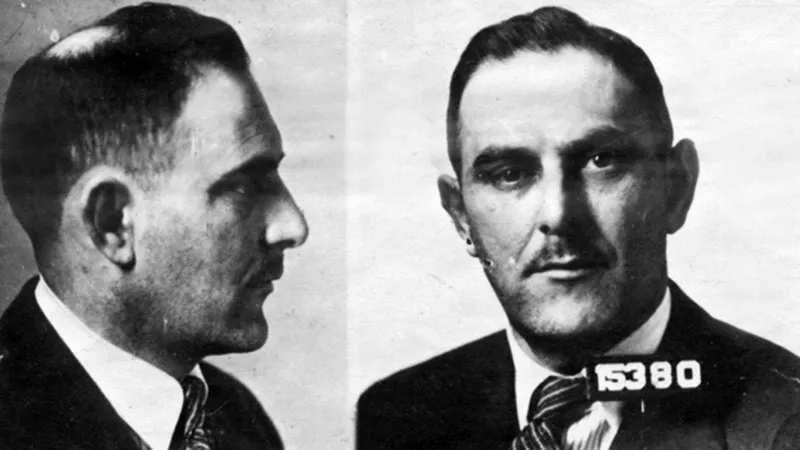
In the spring of 1925, a well-dressed man checked into the Hôtel de Crillon on the Place de la Concorde — one of the most prestigious addresses in Paris — and began quietly preparing to commit one of the most audacious frauds in history. His name, or at least one of his names, was Victor Lustig. His plan was to sell the Eiffel Tower.
He did not own the Eiffel Tower. This was, as far as he was concerned, a minor detail.
A Con Man in Full
Lustig was born in 1890 in Hostinné, a town in Bohemia that was then part of the Austro-Hungarian Empire. He was gifted — spoke five languages fluently, possessed an almost preternatural ability to read people, and carried himself with the easy authority of someone who had been powerful his entire life. None of this was true, of course, but that was rather the point. By his teens, he had abandoned his given identity in favor of rotating aristocratic aliases — Baron this, Count that — and by 18 he was running card games in Vienna. “He could make a deck of cards do anything but talk,” one victim told True Detective Mysteries magazine.¹
The ocean liners that crossed the Atlantic after World War I were his first great stage. Dressed impeccably, moving through first-class cabins with the ease of a man born to them, he befriended wealthy passengers and sold them “money boxes” — mahogany contraptions he claimed could duplicate banknotes — before disappearing at the next port. He had already, in a previous caper, sold London’s Tower Bridge to an unsuspecting mark.² But Paris, in 1925, offered something grander.
The Pitch
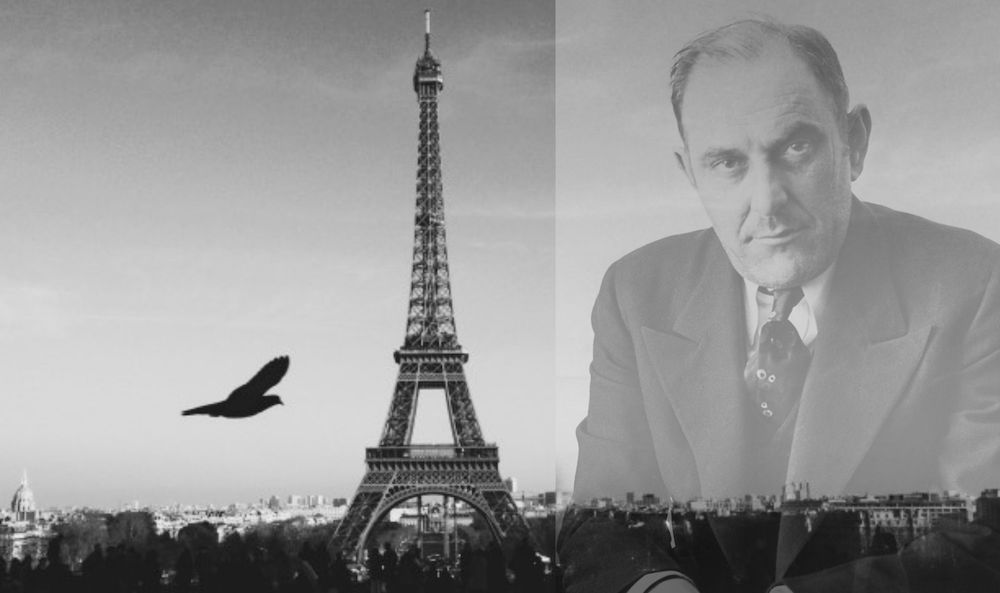
The inspiration, as is often the case with great frauds, came from the newspaper. Lustig read an article noting that the Eiffel Tower — originally erected as a temporary structure for the 1889 Paris Exposition — had become an expensive eyesore. It was 36 years old, covered in rust, and required repainting with 60 tons of paint every seven years. There was even public speculation about demolishing it. Lustig, according to James F. Johnson, the U.S. Secret Service agent who later investigated him and wrote the definitive account of the case, recognized the setup immediately: the plausible, the prestigious, and the pressured — the three pillars of a successful con.³
He had forged stationery printed bearing the official seal of the Ministère des Postes et Télégraphes, the French government department responsible for public buildings. Posing as its Deputy Director-General, he wrote to six of the leading scrap metal dealers in France, inviting them to a confidential meeting at the Hôtel de Crillon — a venue that had hosted royalty and heads of state and whose grandeur alone communicated legitimacy. The message stressed absolute secrecy: public knowledge that the government intended to dismantle the beloved tower would, naturally, cause an uproar.
When the dealers arrived, Lustig was at his finest — authoritative, regretful, burdened by the weight of official duty. The tower, he explained, could no longer be maintained at reasonable cost. The government had made the difficult decision to sell the 7,000 tons of iron for scrap. Their group had been selected because of their known reputations as honest businessmen. Bids would be submitted. Discretion was essential.
He then took the dealers on a chauffeured tour of the tower itself, studying them carefully — not for their bids, but for their psychology.
The Mark
One dealer stood out: André Poisson, a relative newcomer to Paris who was anxious to establish himself among the city’s elite business circles. He was eager, perhaps a little too eager. Lustig arranged a private follow-up meeting and, in one of the more psychologically elegant moves in the history of fraud, confessed to a small flaw in his own character. As a government official, he explained, his salary was quite modest — frustratingly modest, given the responsibilities he carried. He let the implication hang in the air.
Poisson understood perfectly. He had lived in Paris long enough to know that bureaucratic corruption was simply how things worked. The confession didn’t make Lustig seem criminal — it made him seem real. A corrupt official was, paradoxically, a trustworthy one, because only a genuine insider would dare ask for a bribe.
Poisson paid. The equivalent of roughly $70,000 in cash — part purchase price, part bribe — changed hands. Lustig was on a train to Vienna within hours, the money tucked into a valise.⁴
David W. Maurer, the University of Louisville linguistics professor whose landmark 1940 study The Big Con remains the foundational text on confidence games, identified this dynamic precisely. The con man, Maurer wrote, “first inspires a firm belief in his own integrity,” then allows the mark to believe he is participating in something subtly dishonest himself — “and hence a sure thing.” The victim, in trying to out-cheat the con man, becomes the real target, “carefully selected and fatted for the kill.”⁵
The Sequel
When Lustig arrived in Vienna and began monitoring French newspapers for any mention of the scandal, he found nothing. This was not a surprise — it was, in fact, the design. Poisson, upon realizing he had been swindled out of a fortune for a landmark he could never own, was far too humiliated to go to the police. The shame of having been fooled — of having paid a bribe and handed over tens of thousands of dollars for the Eiffel Tower — was worse than the financial loss. He said nothing.
So Lustig went back. A month later, he was in Paris again, running the identical scheme on a new set of scrap dealers. This time, a mark grew suspicious and contacted the police. Lustig fled to the United States, where he resumed his long career in fraud, eventually graduating to a counterfeiting operation so vast that it threatened to undermine confidence in American currency. He was arrested in 1935, escaped from federal detention in Manhattan by fashioning a rope from bed sheets and lowering himself from his cell window — pausing, according to contemporary newspaper accounts, to wave at startled onlookers before sprinting away — and was recaptured weeks later.⁶ He died of pneumonia at Springfield Medical Center for Federal Prisoners in 1947. His death certificate listed his occupation as “salesman.”
The Psychology of It
The Eiffel Tower caper works, as the best cons always do, because it exploits not stupidity but ambition and a very human willingness to see what we want to see. André Poisson was not a fool. He was a successful businessman who wanted to rise further, and Lustig gave him a story — complete, plausible, pressured by secrecy — that fit neatly into his picture of how the world operated. The corrupt bureaucrat was a recognizable type. The confidential government transaction was entirely believable in 1920s France. The only thing Poisson failed to do was question the frame itself.
That is, of course, exactly what a confidence game is designed to prevent. As Maurer observed, the marks who fall hardest are not the naïve — they are the ones who believe, just a little, that they are the clever ones.⁷
Endnotes
¹ Victim quoted in “The Smoothest Con Man That Ever Lived,” Smithsonian Magazine, 2013, https://www.smithsonianmag.com/history/the-smoothest-con-man-that-ever-lived-29861908/. The original quotation appeared in True Detective Mysteries magazine, cited therein.
² Christopher Sandford, Victor Lustig: The Man Who Conned the World (Gloucestershire: The History Press, 2016). Sandford’s account of Lustig’s pre-Paris career, including earlier real estate and monument frauds, is summarized in CBC/Radio-Canada reporting on the book’s publication.
³ James F. Johnson, The Man Who Sold the Eiffel Tower (New York: Doubleday, 1961). Johnson was the U.S. Secret Service agent who helped build the counterfeiting case that resulted in Lustig’s 1935 arrest. His account remains the primary source on Lustig’s methods; for bibliographic context, see the EBSCO Research Starters entry on Victor Lustig, https://www.ebsco.com/research-starters/biography/victor-lustig.
⁴ The transaction details — the bribe, the purchase price, and the Vienna escape — are reconstructed in “The Smoothest Con Man That Ever Lived,” Smithsonian Magazine, 2013, and corroborated in Johnson, The Man Who Sold the Eiffel Tower.
⁵ David W. Maurer, The Big Con: The Story of the Confidence Man (Indianapolis: Bobbs-Merrill, 1940; repr. New York: Anchor Books, 1999), 1–2. Maurer, a professor of linguistics at the University of Louisville, conducted hundreds of interviews with working con men during the 1930s; his book later served as source material for the film The Sting (1973).
⁶ The 1935 arrest and escape were covered contemporaneously by major newspapers. See “‘Count’ Seizure Bares Spurious Money Cache,” Washington Post, May 14, 1935; “‘The Count’ Escapes Jail on Sheet Rope,” New York Times, September 2, 1935. Both cited in “The Smoothest Con Man That Ever Lived,” Smithsonian Magazine, 2013.
⁷ Maurer, The Big Con, 1–3.