

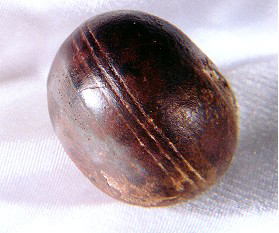
Deep within the pyrophyllite mines near Ottosdal, South Africa, miners have for decades unearthed strange, metallic-looking objects that seem to defy natural explanation. Known as the Klerksdorp spheres, these small, spherical to disc-shaped specimens are found embedded in rock that is roughly 3 billion years old. Their appearance—often featuring perfectly straight, parallel grooves encircling their equators—has led to sensational claims that they are ‘out-of-place artifacts’ (OOPARTs) created by an ancient, advanced civilization or even extraterrestrial visitors long before humans walked the Earth.
The mystery of the spheres gained global attention in the late 1970s and early 1980s through sensationalist media reports. Roelf Marx, the former curator of the Klerksdorp Museum, famously described them as being harder than steel and nearly impossible to scratch. Some reports even claimed that a sphere kept in a vibration-free display case at the museum would slowly rotate on its own axis. These stories fueled the imaginations of fringe theorists and creationists, who argued that such precision-engineered objects could not possibly be the product of nature, especially when found in Precambrian strata dating back to a time when life on Earth consisted of little more than single-celled organisms.
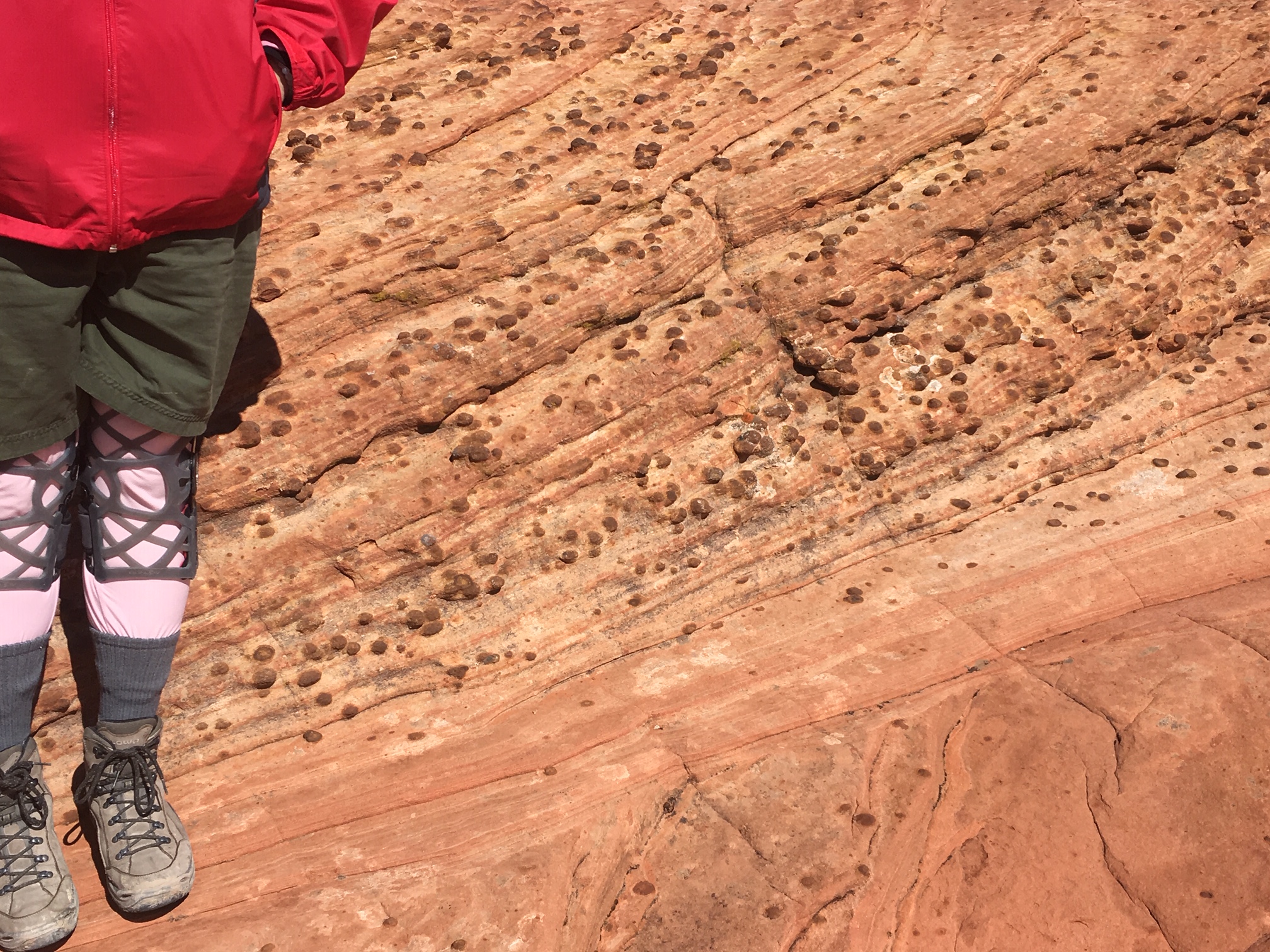
However, professional geologists and mineralogists who have studied the objects offer a far more grounded, though no less fascinating, explanation. Extensive analysis by researchers such as Paul V. Heinrich has shown that the Klerksdorp spheres are not manufactured artifacts but rather natural concretions. These are hard, compact masses of matter formed by the precipitation of mineral cement within the spaces between particles in a sedimentary or volcanic rock. In the case of the Ottosdal objects, they are primarily composed of hematite and wollastonite, minerals that commonly form such structures under specific geochemical conditions.
The most controversial feature of the spheres—the fine, parallel grooves—is also explained by natural processes. Geologists note that these grooves are not the result of machining but are instead a reflection of the original fine-grained layering (lamination) of the sedimentary rock in which the concretions grew. As the mineral mass expanded, it preserved the texture of the surrounding environment. Similar ‘grooved’ concretions have been found in other parts of the world, such as the Moqui marbles in Utah, further supporting the conclusion that the Klerksdorp spheres are a remarkable, yet entirely natural, geological phenomenon.
Endnotes
Cairncross, Bruce. “The ‘Mysterious’ Klerksdorp Spheres.” South African Journal of Geology 91, no. 3 (1988): 415-416.
Heinrich, Paul V. “The Mysterious ‘Spheres’ of Ottosdal, South Africa.” Reports of the National Center for Science Education 28, no. 1 (2008): 28-33.
Nel, L. T., et al. “The Geology of the Country Around Potchefstroom and Klerksdorp.” South African Geological Survey (1937).
Pope, J. R., and Bruce Cairncross. “The ‘Mysterious’ Spheres of Ottosdal.” Nucleus 41 (1988): 24-25.