

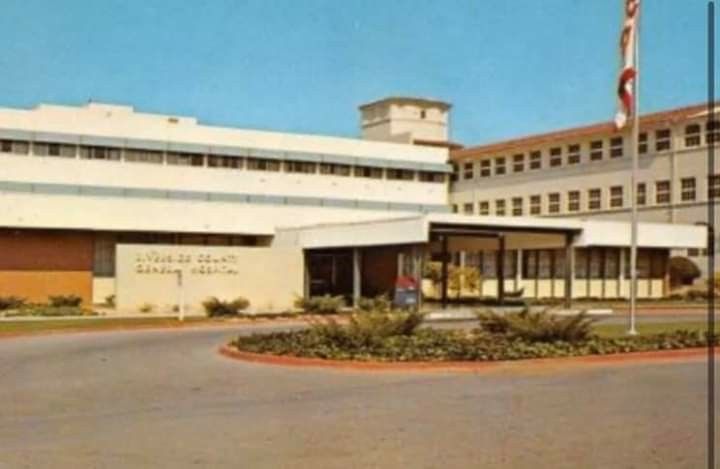
On the evening of February 19, 1994, the emergency room at Riverside General Hospital in California was a typical scene of high-stakes medical urgency. That normalcy shattered at 8:15 p.m. when thirty-one-year-old Gloria Ramirez was wheeled in. Suffering from advanced cervical cancer, Ramirez was experiencing severe heart palpitations, tachycardia, and Cheyne-Stokes respiration. What followed would become one of the most baffling and controversial episodes in medical history, leading to the hospitalization of multiple medical professionals and a scientific investigation that continues to spark debate decades later.
As the medical team worked to stabilize her, they noticed several bizarre physical anomalies. Ramirez’s body was covered in an oily sheen, and a strange, fruity, garlic-like odor seemed to emanate from her mouth. When Susan Kane, a registered nurse, drew blood from Ramirez’s arm, she was hit by a sharp, ammonia-like smell coming from the syringe. She passed the tube to Julie Gorchynski, a medical resident, who observed manila-colored crystals floating in the blood. Moments later, the crisis escalated from a medical emergency to a full-scale evacuation. Kane fainted, followed shortly by Gorchynski and Maureen Welch, a respiratory therapist. In total, twenty-three people became ill, and the emergency room was declared a hazardous materials zone.
Despite the chaos, a skeleton crew remained behind to continue life-saving efforts on Ramirez. However, at 8:50 p.m., after forty-five minutes of unsuccessful resuscitation, she was pronounced dead from kidney failure related to her cancer. The hospital was left with a dead patient and a staff plagued by mysterious symptoms, including shortness of breath, muscle spasms, and loss of consciousness. Julie Gorchynski was the most severely affected, spending two weeks in intensive care and later developing hepatitis and avascular necrosis in her knees.
The initial investigation by the California Department of Health and Human Services suggested that the incident was a case of mass hysteria. Investigators noted that the majority of those affected were women and that subsequent blood tests on the staff showed no signs of toxic exposure. This conclusion was met with fierce resistance from the medical staff, particularly Gorchynski, who argued that her severe physical ailments could not be explained by a psychological reaction. The mystery deepened as the Riverside Coroner’s Office sought a more rigorous scientific explanation for the ‘toxic’ fumes.
The breakthrough came from the Lawrence Livermore National Laboratory. Scientists proposed a complex chemical chain reaction that began with a common home remedy. They theorized that Ramirez had been using dimethyl sulfoxide (DMSO) as a topical pain treatment for her cancer. DMSO, which is known to have a garlic-like odor, could have built up in her system due to her kidney failure. When paramedics administered oxygen, it may have converted the DMSO into dimethyl sulfone (DMSO2), which forms crystals at room temperature—explaining the particles seen in her blood.
The final and most dangerous step in this theory involved the defibrillation shocks. Livermore scientists postulated that the electrical energy, combined with the slightly lower temperature of the emergency room, converted the dimethyl sulfone into dimethyl sulfate (DMS). Dimethyl sulfate is a highly toxic and carcinogenic alkylating agent. Exposure to even small amounts of DMS vapors can cause exactly the symptoms the hospital staff experienced: fainting, respiratory distress, and neurological issues. While some organic chemists remain skeptical of the speed and likelihood of this reaction occurring within the human body, it remains the most scientifically grounded explanation for the events of that night.
Endnotes
Houck, Patrick R., et al. “A possible chemical explanation for the events associated with the death of Gloria Ramirez at Riverside General Hospital.” Forensic Science International 87, no. 3 (1997): 219-224.
Mydans, Seth. “After Airtight Autopsy, Mystery Lingers in Case of Hospital Fumes.” The New York Times, February 26, 1994.
Osorio, Ana Maria, et al. “Investigation of a mysterious illness in an emergency department.” The New England Journal of Medicine 331, no. 14 (1994): 946-947.
Thompson, Richard. “Analysis of a Toxic Death.” Discover Magazine, March 31, 1995.