The Bystander Effect: Why Groups Make People Less Likely to Help
David DiezFebruary 25, 20266 min read0 comments
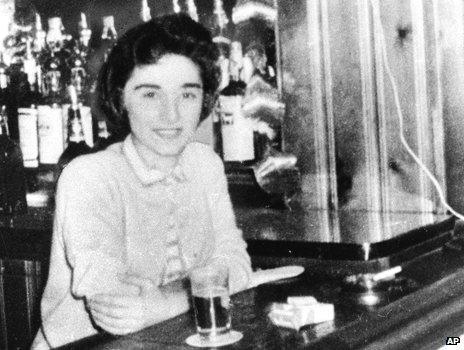
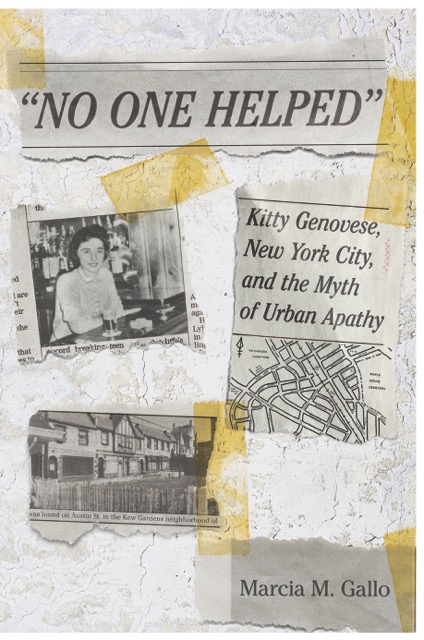
In March 1964, 28-year-old Kitty Genovese was murdered outside her apartment building in Queens, New York. According to initial reports, 38 neighbors witnessed the attack but none intervened or called police until it was too late. While later investigations revealed these numbers were exaggerated — perhaps a dozen people actually saw or heard portions of the attack, with two calling police — the case became a defining moment in social psychology. It sparked research into what psychologists now call the bystander effect: the counterintuitive phenomenon where people become less likely to help a victim as the number of bystanders increases.
John Darley and Bibb Latané, then researchers at Columbia University and New York University respectively, conducted the first experimental studies of this effect in 1968. Their groundbreaking research, published in the Journal of Personality and Social Psychology, revealed that the presence of others fundamentally alters how individuals respond to emergencies. In their classic experiment, participants believed they were communicating with other students via intercom. During the conversation, one “student” — actually a recording — began having a seizure and cried for help. When participants believed they were alone with the victim, 85% left their room to seek help. When they believed four other bystanders were present, only 31% intervened. Those who did help took significantly longer to act when they thought others were available.
The case of Kitty Genovese, which led to the discovery of the bystander effect. Image: Public Domain.
The experiment demonstrated that the bystander effect stems not from apathy or indifference, as initially assumed, but from specific social and cognitive processes. Darley and Latané identified three primary mechanisms driving the effect. First, diffusion of responsibility: as group size increases, individuals feel less personal obligation to act, assuming someone else will step forward. Second, evaluation apprehension: people fear public judgment if they respond inappropriately or awkwardly in front of others. Third, pluralistic ignorance: bystanders look to others for interpretation of ambiguous situations, and when no one reacts, everyone concludes the situation is not actually an emergency.
These findings established what became known as the five-step decision model of helping. According to this model, a bystander must first notice the event, then interpret it as an emergency requiring intervention, then feel personally responsible to act, then know how to help effectively, and finally decide to implement that help. At any point in this chain, the process can break down. The presence of other people creates barriers at multiple stages — particularly at the responsibility-assessment stage.
Recent research has expanded understanding of when and why the bystander effect occurs. A 2011 meta-analysis by Peter Fischer and colleagues, published in the European Journal of Social Psychology, examined 105 studies and over 7,500 participants. The analysis confirmed that bystander inhibition is strongest when bystanders are strangers rather than friends, when the emergency is unambiguous rather than unclear, and when bystanders cannot easily see each other’s reactions. Interestingly, the meta-analysis found that dangerous emergencies — those involving perceived risk to the helper — actually showed smaller bystander effects than non-dangerous situations, suggesting that clear threats may overcome some of the social inhibition.
Neuroscience research has begun uncovering the biological mechanisms behind bystander apathy. A 2018 review in the European Journal of Neuroscience proposed that the presence of other bystanders triggers reflexive emotional responses including heightened personal distress and fixed action patterns of avoidance or freezing. This perspective suggests that bystander behavior involves not just cognitive decision-making but automatic emotional reactions that can override helping impulses. Individual differences in empathy and personal distress sensitivity predict whether someone will overcome these barriers.
The bystander effect has proven remarkably robust across contexts. Researchers have documented it in online environments, where the presence of other “lurkers” reduces responses to requests for help in chat rooms. It appears in children as young as five, who show reduced helping when other children are present. Even surveillance camera footage of real-world emergencies confirms the laboratory findings — larger groups correlate with slower or absent helping responses.
However, understanding the bystander effect has also pointed toward solutions. Bystander intervention training programs, now common on college campuses and in workplaces, specifically target the decision-making stages where intervention typically fails. Training focuses on increasing awareness of the effect itself, teaching specific intervention skills, and establishing personal responsibility through explicit commitments. Research published in the Journal of Counseling and Development in 2024 found that middle school students who received bystander training showed significant increases in noticing bullying events and deciding to intervene, while untrained students actually showed decreases in these behaviors over time.
The five Ds of bystander intervention — Direct, Distract, Delegate, Delay, and Document — provide practical frameworks for overcoming the paralysis of group presence. Direct intervention involves confronting the situation personally. Distraction involves interrupting the dynamic without direct confrontation. Delegation means calling authorities or enlisting others specifically. Delay involves checking in with the victim after the immediate moment passes. Documentation provides evidence for later reporting.
The legacy of the Genovese case, despite its factual inaccuracies, endures because it revealed an uncomfortable truth about human nature. Most people imagine themselves as potential heroes who would rush to aid someone in distress. But social psychology demonstrates that human behavior is powerfully shaped by situational forces, not just personal character. The presence of others — normally a source of safety and comfort — can paradoxically become a source of dangerous paralysis.
Darley and Latané’s research transformed how we understand moral action. Helping behavior is not simply a matter of good or bad people making good or bad choices. It emerges from a complex interplay of attention, interpretation, responsibility, knowledge, and action — all influenced by the social environment. Recognizing these patterns offers hope: by understanding why groups inhibit helping, we can design interventions that transform bystanders into active allies. The goal is not to lament human nature, but to create social contexts where the presence of others enables rather than prevents courageous action.
Bibliography
Darley, J. M., & Latané, B. (1968). Bystander intervention in emergencies: Diffusion of responsibility. Journal of Personality and Social Psychology, 8(4), 377-383. https://psycnet.apa.org/record/1969-07481-001
Fischer, P., et al. (2011). The bystander-effect: A meta-analytic review on bystander intervention in dangerous and non-dangerous emergencies. Psychological Bulletin, 137(4), 517-537. https://pubmed.ncbi.nlm.nih.gov/21534650/
Latané, B., & Darley, J. M. (1970). The unresponsive bystander: Why doesn’t he help? Appleton-Century-Crofts.
Peck, M., Doumas, D. M., & Midgett, A. (2024). Examination of the Bystander Intervention Model among middle school students: A preliminary study. Journal of Counseling and Development, 14(2). https://tpcjournal.nbcc.org/